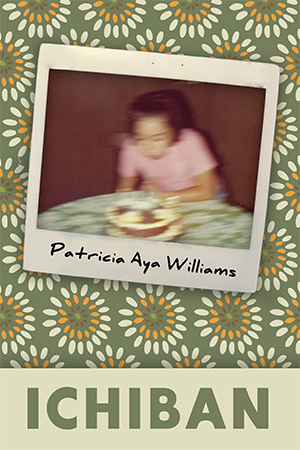
Patricia Aya Williams, Concrete Wolf Louis Award Winner for Ichiban
Patricia Aya Williams’ Ichiban follows a Japanese mother, an American father,
and their daughter from post-WWII Japan to the Gen-X schoolyards of East
San Jose. Decades after the father’s early death, the mother asks him: “Pat, my
handsome young sailor / ichiban yasashii na kao…how you will recognize / my
prune face, more than twice your age?” As if anyone could forget her, especially
after Ichiban captures her voice, humor, and tenacity with such vibrancy.”
—Allison Pitinii Davis, author of Line Study of a Motel Clerk and Business: a novella
Light
Take the china cabinet. Please.
If you don’t I gotta find somebody else who will.
Listen—I wanna be light.

O Mother. If I could, I would write
this poem not with words,
which often plagued us,
but with pure light: its variations
and attendant sorrows. I would bird
your longing on wings
that brave every brutal winter
so you return, always, to a window
brightened with home.

O Mother. You meant light as in
not heavy—gift
that weighs nothing yet
unwraps itself into abundance.
What else but light
to hostage us from darkness?
What else but light is left of you now,
your sparrow body at the end?
At the end, Mother,
I wished for you your wish.
To be light. To be light.
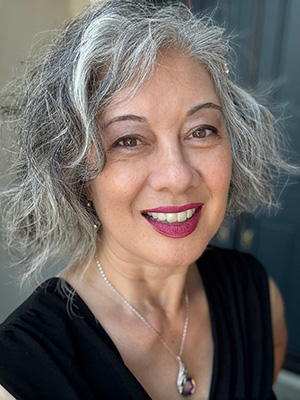
Patricia Aya Williams grew up in San Jose, California, daughter of a Japanese-born mother and an
American father. She is a graduate of San José State University, where she earned both a BA in
humanities with a minor in Japanese and a master’s in library and information sciences. She enjoyed two
diverse careers: first as a flight attendant, second as a public librarian. She is the author of the mini-
chap Haiku for Parents (Origami Poems Project, 2020) and the chapbook Failure Goddess (Dancing Girl
Press, 2026). Her poem “Ichiban” won the Red Wheelbarrow Poetry Prize 3rd Place in 2022, judged by
Juan Felipe Herrera. Her poems are published in or forthcoming from many journals and anthologies,
including Whale Road Review, Sheila-Na-Gig, and Tupelo Press anthology The Writes of Spring. She
lives in San Diego, California, with her husband, Christopher, and dog, Binxy Elton.
Visit Patricia's page at ConcreteWolf.com
Purchase Patricia’s collection from your favorite retailer:
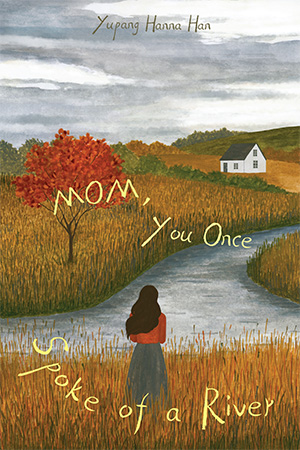
Yupang Hanna Han, Concrete Wolf Chapbook Award Winner for Mom, You Once Spoke of a River
Yupang Hanna Han’s Mom, You Once Spoke of a River sings forth the garden paths and
soupy ghosts and leafy exoskeletons conjured by a talented young poet. Han’s poems dive
into the sensory spaces of memory with lyrical precision, startling images, and narrative
care. Each line is viscerally felt, vulnerably so: “I carry you in small things: / knuckles
that stiffen in winter, / a way of pausing before I speak.” This is a debut from a marvelous
poet and I’m so grateful to linger among these poems which traverse such vast distances,
daughters, and diasporas.
——Jane Wong, author of Overpour and How to Not Be Afraid of Everything
Prayer for Persephone
She told me she would arrive as a bird,
a swan, its wings wet with the light of the dead.

But when dawn cracked the sky open,
she was not the bird. She was only the silence
left in its absence.

What does it mean to be abandoned
by the things you carried through seasons?
Her voice was the thrum of a string snapped,
its pitch gone, the air thin where it used to hum.

I could not find her in the dark,
only the hollow left by something once full.

Th e underworld never makes promises.
I called for her through the earth’s tight jaw,
where roots hold old names in their gnawing,

but she was not there. She was the thing
that keeps the grave from closing—
the tug, the fracture, the weight of the long sleep.

What is a goddess
but the shape we give
to our forgotten sorrows?

What is myth but the ghost
we summon to cradle us
before we break?

When her body turned to ash
in my hands, I thought I could feel
the world slow its pulse
to wait for me to move.

And then the wind came,
lifting the dust of everything
we never said,

scattering it like leaves
where the roots have no place
to take hold.
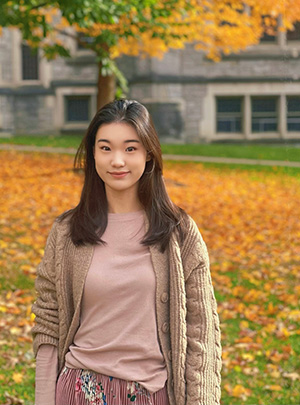
Yupang Hanna Han grew up among books and stories and now spends her days thinking about mothers
and daughters, language, and what it means to leave or to stay. Her poems move through lived memory
and the hush of domestic life, returning to rivers, gardens, and the small rituals that shape what we call
home. She is especially drawn to rewriting and relistening—to mythological figures, to women’s stories,
and to the emotional afterlives of childhood—approaching poetry as a way of staying with what is fragile
or half-remembered. Her work has appeared in Tiger Leaping Review, Blue Marble Review, and Penelope Review,
among others, and was a Pushcart Prize nominee, with further recognition from the Smith
College Boutelle-Day Poetry Center and the YoungArts. She lives in Troy, New York, where she spends
most days thinking in poems, or on the verge of a dream she has not yet written down.
Visit Yupang Hanna 's page at MoonPathPress.com
Purchase Yupang Hanna's collection from your favorite retailer: